
Are Yarn Scraps For the Birds?
I saw my first robin of the season the other day. Growing up, that was always remarked on by the adults around me: “the first robin of spring!” I still look out for it to this day as a signifier that winter is behind us and new life is beginning, including in newly made birds’ nests.
I know most of us have been spending the cold, dark winter crafting and probably have an ORT (Old Raggedy Threads) jar full to bursting. Mine is an old peanut butter jar from the 90s when Kraft briefly made glass jars in the shapes of teddy bears (mine’s Grandma Bear). A lot of crafters want to help the birds out by leaving their yarn and thread scraps as something soft they can add to their nests. But, as well-intentioned as this practice is, it is unfortunately more harmful than helpful.
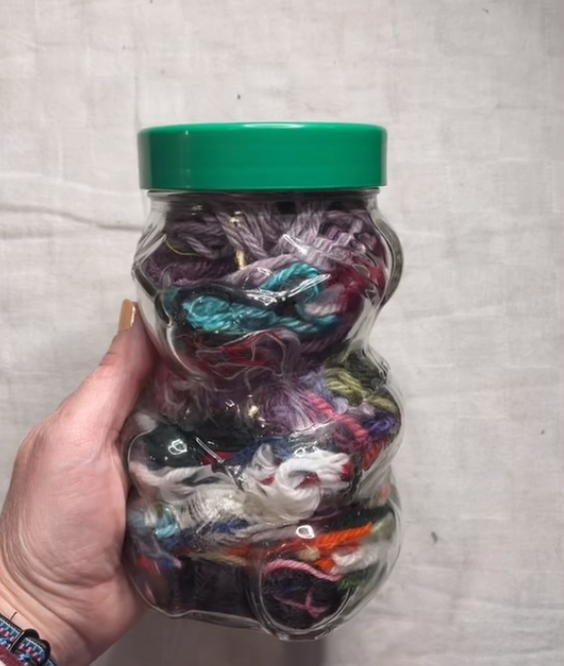
Grandma Bear keeping all my threads tidy
Scraps can injure the birds
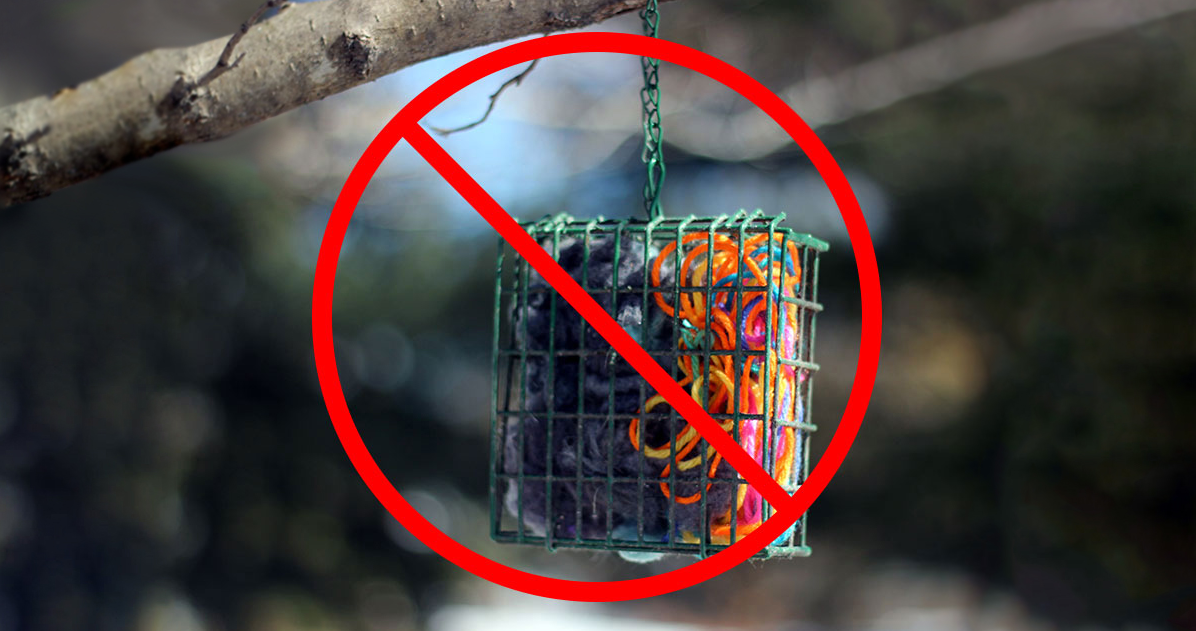
Yarn, thread, and string can get wrapped around birds legs, cutting off circulation or even trapping them to their own nests. When baby birds are born, it can get wrapped around their necks, strangling them, or wrapped around their legs or wings, causing them to lose those limbs.
“Well, what if I just cut the yarn really short?” I hear you ask. That only fixes one problem, because…
Birds Can Ingest Them
Birds use their beaks to pick up and arrange nesting material, so there is a chance that some can be ingested. Birds have no way of digesting synthetic material and if they ingest enough of it they can experience serious blockages in their GI tract, which can be fatal.
“But what if I only use natural fibres?” That still doesn’t fully fix the problem because…
Cotton and Wool Retain a Lot of Water
Cotton can absorb 24%-27% of its weight and wool can absorb 30%-35% of its weight in water. That’s a lot more than most of the nesting material that birds find out in nature. Nests are made to be warm and secure, but also need to drain waste away and dry quickly. Yarn scraps can prevent this from happening, keeping the nests damps and holding onto bacteria and mold that can cause illness, especially in the chicks.
Bright Colours Can Attract Predators
Most birds are sexually dimorphic, which means that the males and females look very different from each other, with the males usually being bright and colourful and the females sticking with brown palettes (they must be Autumns). One reason for this is that females need to camouflage while spending extended periods of time sitting on eggs in the nest. Bright colours from yarn can make the nests stand out and act as a big “look at me!” signal to predators.
How Should You Help The Birds?
Just like how you shouldn’t feed bread to ducks, we should introduce processed materials to birds nests. But there are ways you can help nesting birds that are in line with how their nests work best in nature. If you’re a gardener, you can put out the worn-out linings from hanging baskets or small piles of yard waste like twigs and plant stems. Collect fluffy plant matter and seeds, like cattails or milkweed fluff, or moss or grass clippings that haven’t been treated with any chemicals.
What Should You Do With Your Scraps?
This is all well and good for the birds, but we’ve still got all those scraps! Here are a few things you can do with them:
Use them as stuffing in amigurumis, handmade dolls, or pin cushions
Tease them apart with carders and spin them into new yarn (either alone or by blending them with spinning wool, depending on how many scraps you have)
Gather any scraps that are 2.5 in (6 cm) long and make a scrappy latch hook rug
If you have kids, give them some construction paper, glue, and yarn scraps and let them make some abstract art (if you don’t have kids, ask a local elementary or preschool if they would like them)
Gather them in a bundle, tie some yarn tightly around the middle and make a pom pom
Use them in an Avant Garde tapestry weaving project
Put them in a glass vase and leave them out as an interior design piece that really speaks to your fibre passion
What do you use your yarn scraps for? Lets share ideas in the comments!