
The Great 4” Square Race! Knitting vs. Crochet vs. Pin Loom Speed
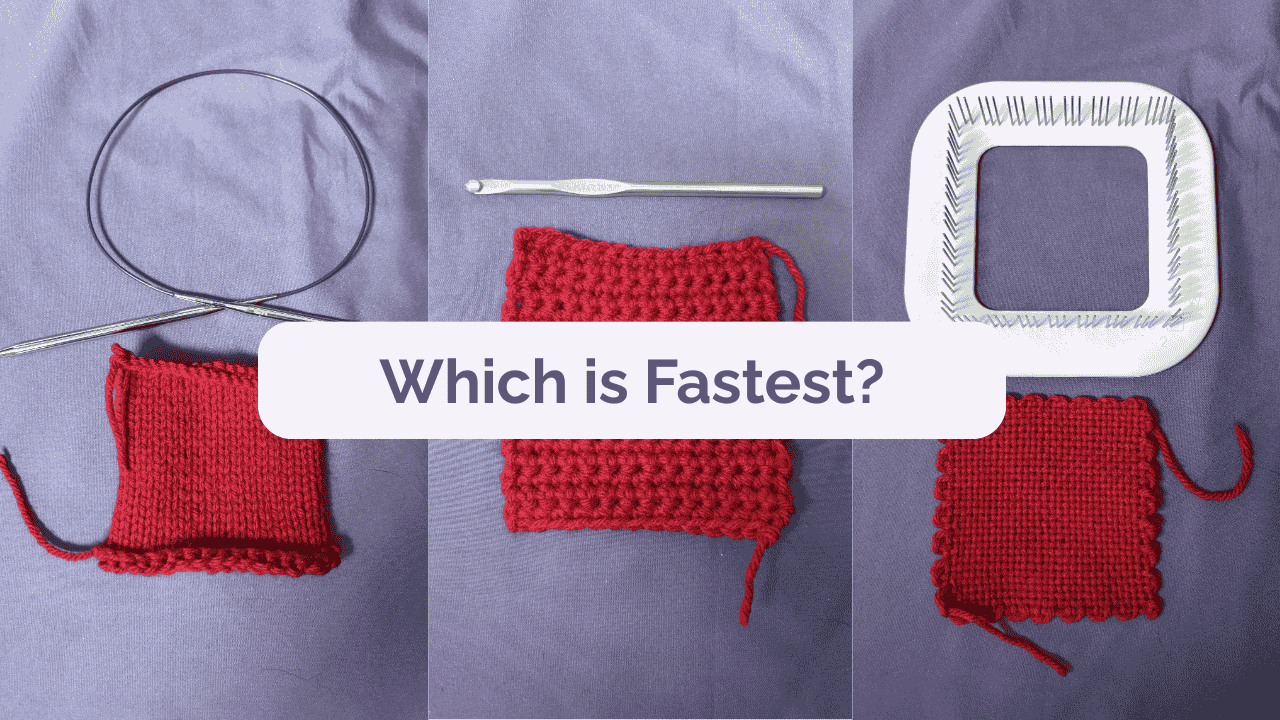
If you’re a multi-crafter and trying to decide what skill to use for a project, there are a lot of factors to consider. If you’re pressed for time (like, starting those Christmas gifts in November pressed for time) speed may be high on that list. So, I set out to find out which technique is faster: knitting, crochet, or pin loom weaving.
The Great 4” Square Race
To conduct this speed test, I made everything as equal as possible so that the only variable is the craft itself. I used the same yarn (a size 4 acrylic) for all 3 samples. For the knit and crochet samples I used the same needle/hook size (5mm) and was careful with my gauge so that both resulted in a 4” square. The knit square was completed in stocking stitch and the crochet was done in single crochet (the standard stitch patterns for gauge swatches). Pin looms are designed to make a 4” square so there was no gauge to consider there. I’m equally proficient in all 3 crafts so there was no issue with me being quicker with one craft over the others. I worked each sample with the energy of someone on their way to the recipient’s house trying to finish the last square in the car ride there. I feel I made this as close to a fair race as I can.
You can watch the full video here (I sped up the work by 8x, otherwise the video would have been over half an hour long)
The Results
Knitting = 21:54 (1:22 minutes/square inch)
Crochet = 15:43 (58 seconds/square inch)
Pin loom weaving = 12:50 (48 seconds/square inch)
It’s long been known in the fibre community that crochet is faster than knitting. My experiment resulted in almost 6 minutes difference between the two crafts. It turns out that the pin loom is even faster! When the pin loom was invented in the 30s it was advertised highlighting its speed, so I’m also not surprised that it came in first place in this race.
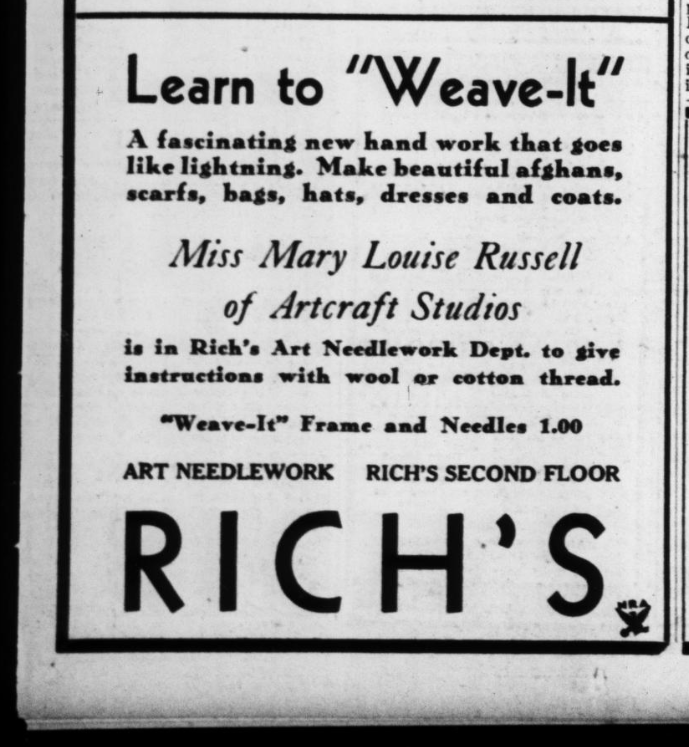
This 1934 advertisement in The Atlantic Constitution calls pin loom weaving “hand work that goes like lightning.”
So what does this mean for planning projects? Based on my times (just like a microwave, yours may vary) a small 24” x 24” baby blanket, as an example, would take 36 pin loom squares, or just over 7 hours to weave. Knitting would take a little over 13 hours and crochet would take almost 10 hours. Of course, pin loom squares have to be sewn together, so that would add a few hours to the total project, whereas if you knit or crocheted the full size of the blanket you would only have the knitting or crocheting time. I doubt the sewing would take more than the 3 hours difference between weaving and crochet, however, so I believe there is still time savings to be had.
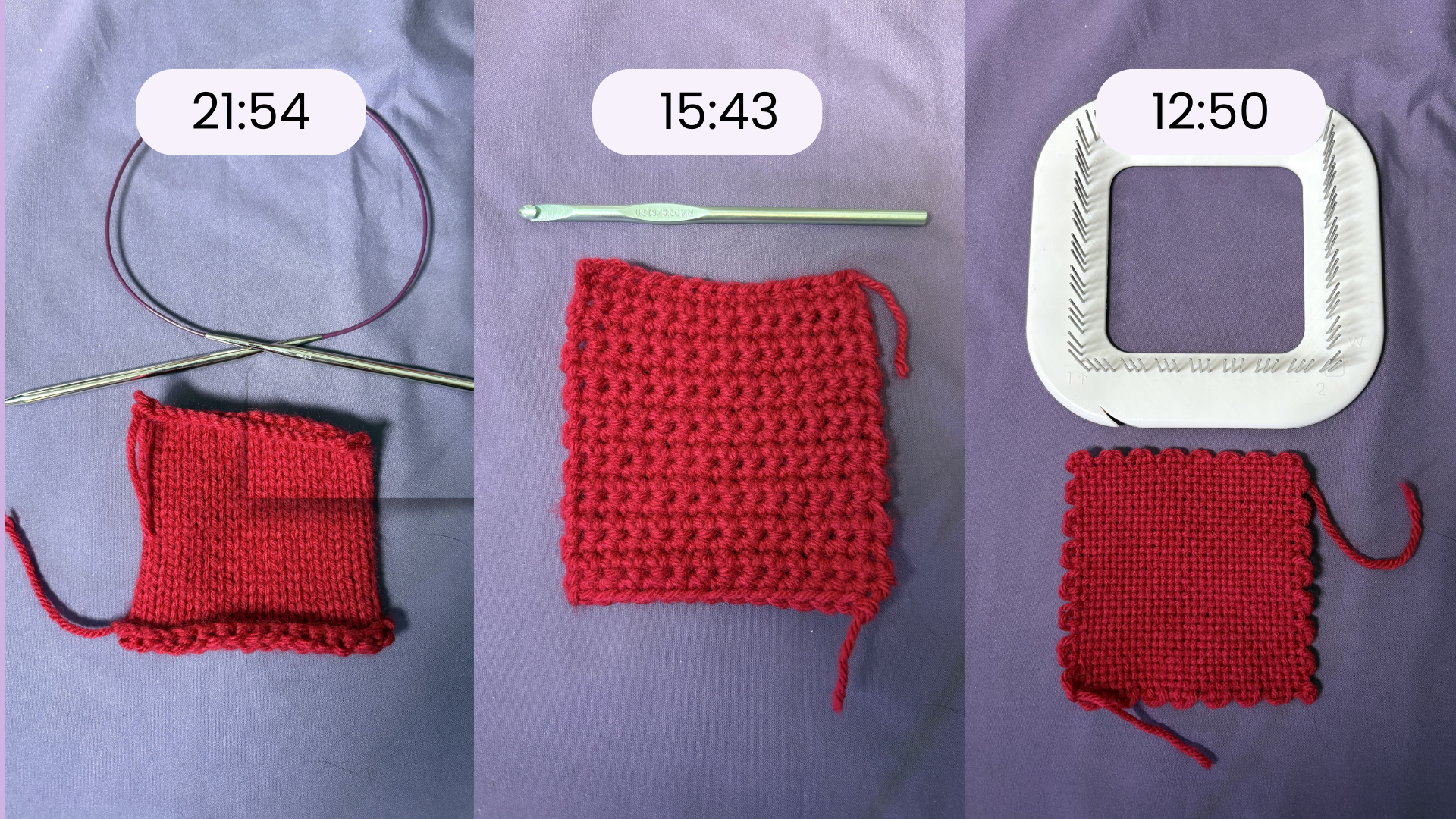
Three worthy competitors with their finishing times
When it comes to speed, the pin loom is the winner, likely even with the added work of sewing the squares together (I’ll do a post in the future to confirm this). The portability of these tiny looms also means you can work on them wherever you are, so you have more opportunities in a day to work on your project (you can work on the go with knitting and crochet, as well, but it can be difficult to go places with a whole blanket on your needles).
Next in my series on the pros and cons of knitting vs crochet vs pin loom, I’ll unravel each of these samples (gasp!) and measure how much yarn each used.
Read the Rest of the Craft Comparisons Series
How much yarn does each craft use? (coming soon)
Versatility in knitting vs crochet vs pin looms (coming soon)
Ultimate pros and cons breakdown (coming soon)
Have a suggestion for something you’d like me to dive into? Leave me a comment!