
Why Do We “Make Do and Mend”?
In the craft world, this month is often referred to as Make Do and Mend March. It’s a time to encourage the act of repairing, rethinking, and recycling our possessions rather than sending them to landfills and replacing them. Along with the lovely alliteration, it is fitting that this takes place in March because spring is a time for renewal, of making old new again, and setting yourself up for the year to come.
The term “Make Do and Mend” isn’t a trend made up by modern crafters. It was coined during WWII as a way to conserve materials needed for the war effort (like wool) and to help people survive during harsh rationing. But is it still relevant now? When we can throw out a ripped top and have a new one ordered for delivery all in less than 5 minutes, why spend our time fixing or repurposing, especially if that time includes time spent learning the necessary skills in the fist place?
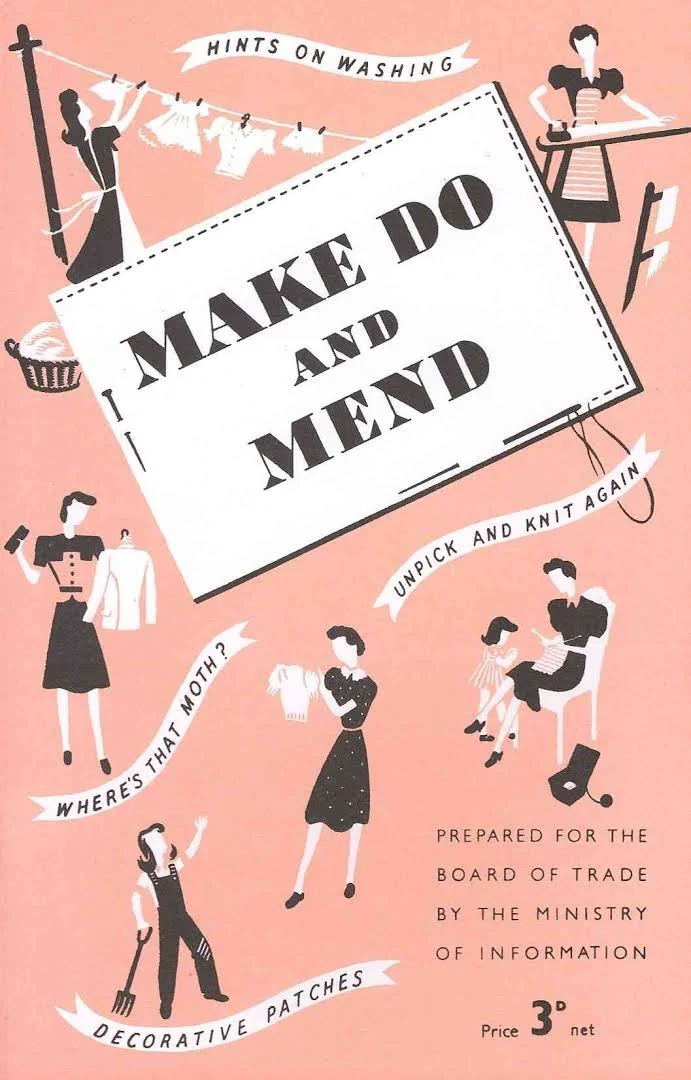
A 1943 booklet teaching women how to extend the life of their family’s clothes during wartime rations
Overconsumption
The invention of factory processing for most of our goods has made production more efficient and therefore more affordable. This, combined with a decrease in quality of these quick buy goods is a recipe for overconsumption. Because things are easy to buy, we make purchases with less consideration. And because it’s easier to replace than to fix, the factory to landfill pipeline is the path of least resistance. But what if you extended the life of your clothes and textiles a little longer? Would you buy less? Appreciate what you have more?
Saving Money
Although the things we purchase cost less now than they would have if they were made before factory production took over, the cost of living is still increasing. Nearly everything we buy is more expensive than it was 5 years ago, without salaries rising to match it. But even if this wasn’t the case, the low cost of purchasing things like fast fashion come with hidden costs that most people don’t consider. Your taxes pay for the landfills that become the final resting place of that cute top that’s now so last season. They also pay to clean up the pollution that is often caused by textile manufacturing. What you seem to be saving by buying a $50 fast fashion top instead of a $150 sustainably made top goes to pay for the consequences of its manufacturing.
Creativity and Personal Fulfillment
For hundreds of years, learning how to make, mend, and repurpose clothes and textiles was a part of the skills learned to become a successful adult. While largely gendered towards women, men also often learned these skills as they pertained to their own responsibilities (there’s a lot of overlap between sewing fabric and sewing leather, for example). With the increase in availability of ready-made items, these skills are no longer part of standard adulting, which means many people miss out on the enjoyment and satisfaction that making things can give. Even when these skills were a daily requirement, women used them as an opportunity for creativity and self-expression. I believe creativity is absolutely a human psychological need and there are far fewer opportunities to express it in our modern world. It may take some time at the outset to gain and develop the skills involved, but the benefits are decades of being able to truly own the things we buy, to be able to extend their use, and get that dopamine hit from seeing something you did for yourself.
The campaign of “Make Do and Mend” was regarded as an onerous sacrifice during WWII. Today, in a world where it is not being forced on us but is every bit as important, many crafters see it as a badge of pride to use their creativity to extend or reimagine the lives of their clothes and household items. There’s magic in being able to turn a felted sweater into a pair of mittens or use embroidery to turn a moth hole or stain on a shirt into a unique embellishment.