
Why Do People Still Spin Yarn?
The spinning jenny, a multi-spindle frame that allowed one spinner to do the work of 8 (then later, 120) spinners at once and kick-started the factory system of textile manufacturing, was invented over 250 years ago. From there, humans invented fully-mechanized industrial spinning machines to make the work of turning fibre into thread or yarn almost completely hands off. Add to that the wide and ever-increasing variety of yarns available commercially for knitters, crocheters, and weavers to fit almost any project they could want to make and it begs the question: why would anyone bother learning to spin? In fact, I once said this exact sentiment to friend who mentioned she was learning to spin: “why would I add more time to the time it takes to make a project when I can just buy the yarn and cast on right away?” 20 years later, I have competed a 6-year hand spinning program at an arts college and teach spinning to students eager to do just that. So why does the craft of spinning persist when it seems so very unnecessary?
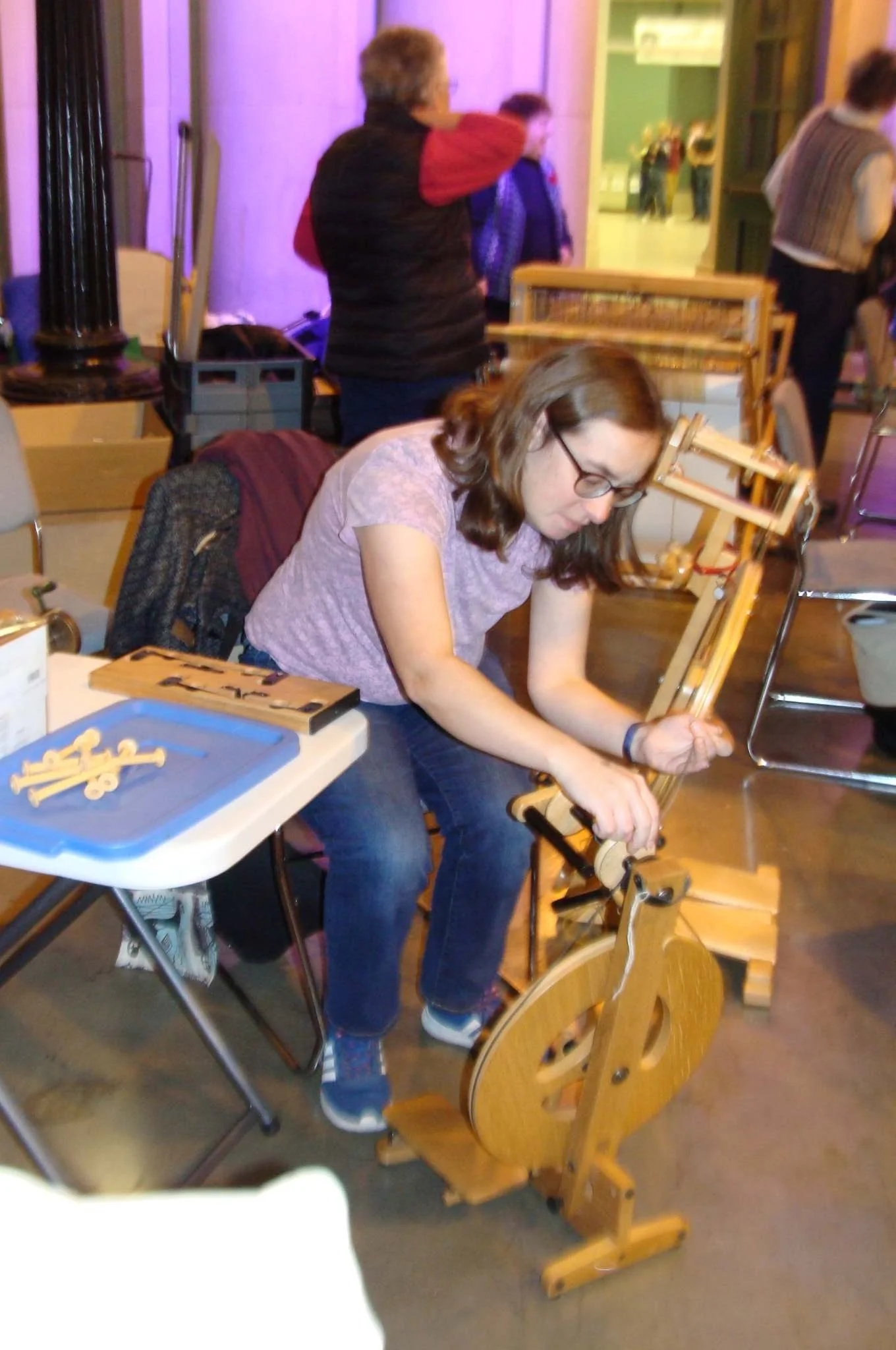
Satisfaction of Making Things By Hand
The question of “why make something when you can just buy it?” already sounds ridiculous to crafters. Yes, I can buy a package of socks at Walmart in 5 minutes, yet I routinely spend 15-20 hours making a single pair. There’s not a single thing I have ever knit or crocheted in my life that I couldn’t buy some version of at a store, but I don’t. There is a deep satisfaction in putting in the time and effort to make something by hand. This sense of satisfaction is so strong it has been shown to have a positive impact on people experiencing anxiety and depression (see my blog post for some scientific sources). The repetitive movements involved in hand making can have a calming affect and even reduce minor cognitive impairment. It’s no wonder many spinners are process spinners (rather than product spinners). They spin for the soothing rhythm of it, more so than for the skeins of yarn they produce.
Creativity, Quality, and Control
Have you ever had an idea for something you wanted to make, but couldn’t find yarn in the exact colour/ weight/ fibre/ softness/ drape/ etc. that you wanted? Although there is a greater variety of yarns on the market than ever before, yarn production is still determined by the market. Some truly excellent yarns have been discontinued due to lack of sales. Colours are chosen based on popularity, which may not include your favourite shade. Yarn designers are looking to create yarns that will fit a wide variety of projects for perspective buyers to make, not necessarily the exact project you have in mind. Being able to make your own yarns means you can make the exact yarn you want for the project you have in mind. As a hand spinner, you don’t have to consider market forces or profit/loss calculations. You can combine different fibres and techniques based on your own wants and preferences. Add dyeing to your list of skills and you can have complete creative control from start to finish!
The more you understand about fibre characteristics and yarn construction, they better you will be at your other yarn crafts. When you gain an understanding of how things like fibre, twist, grist, ply, and other options affect the finished yarn, you know how to pick the best yarn for your intended project, whether you make that yarn yourself or buy it from a store.
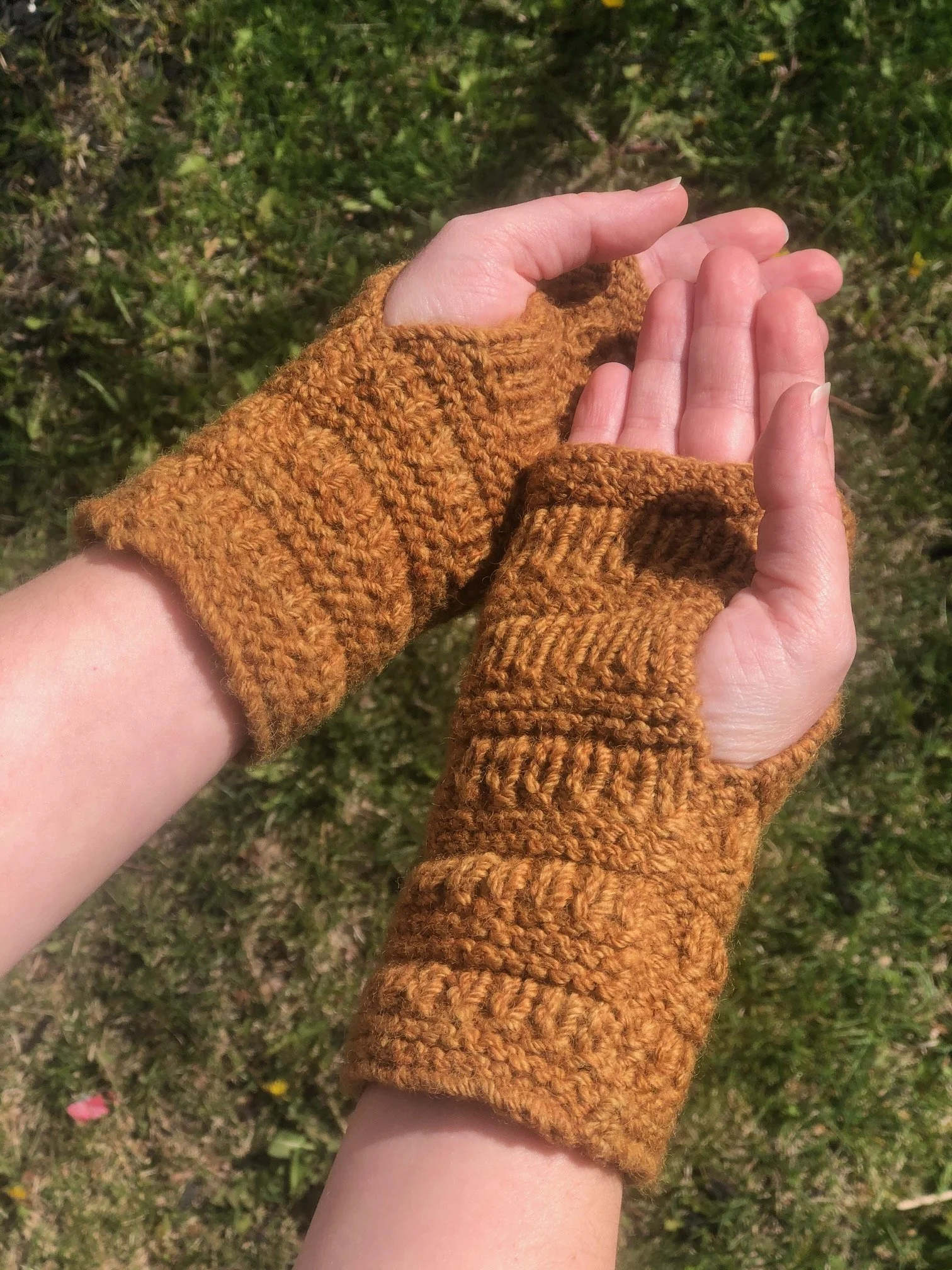
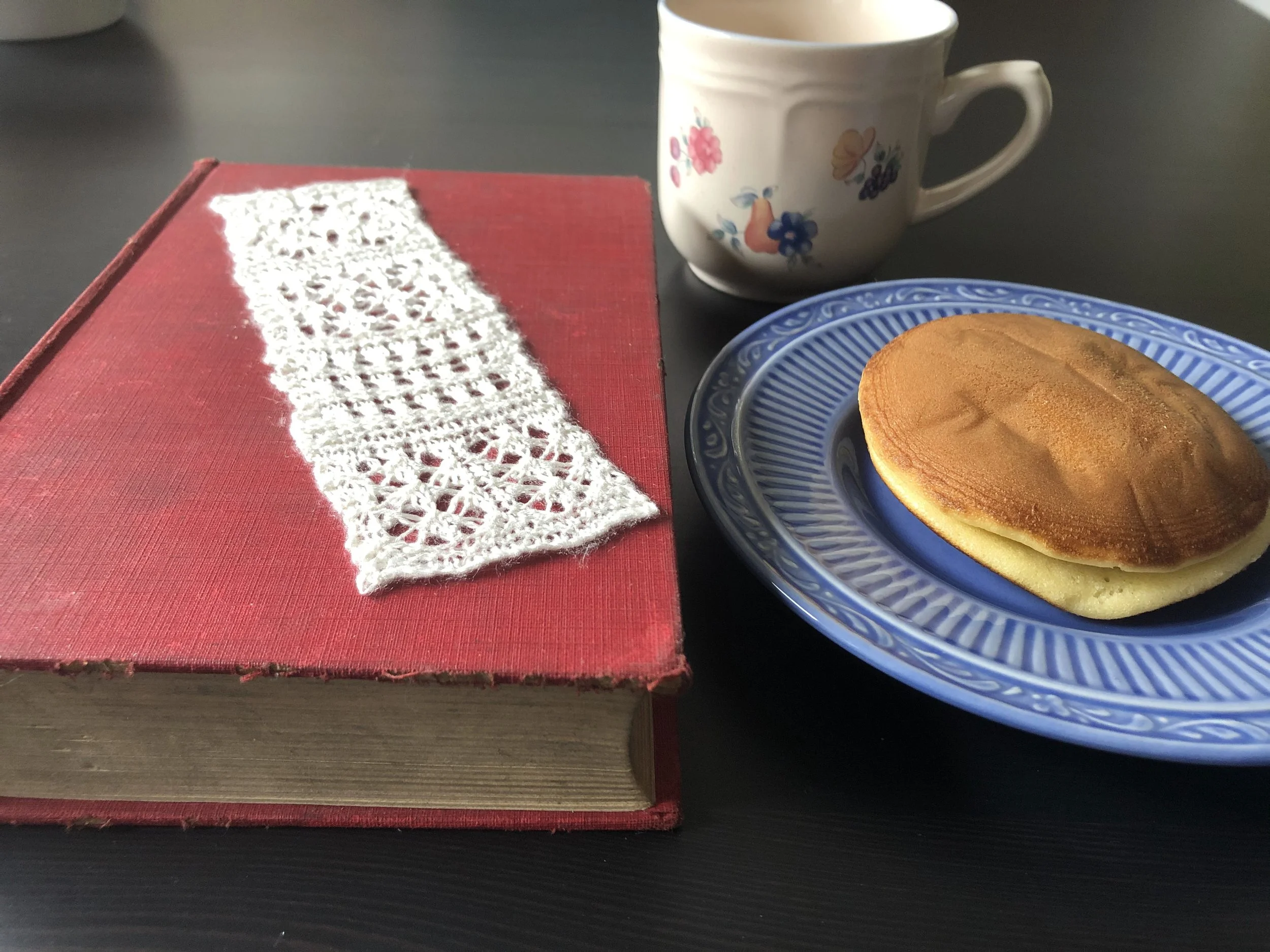
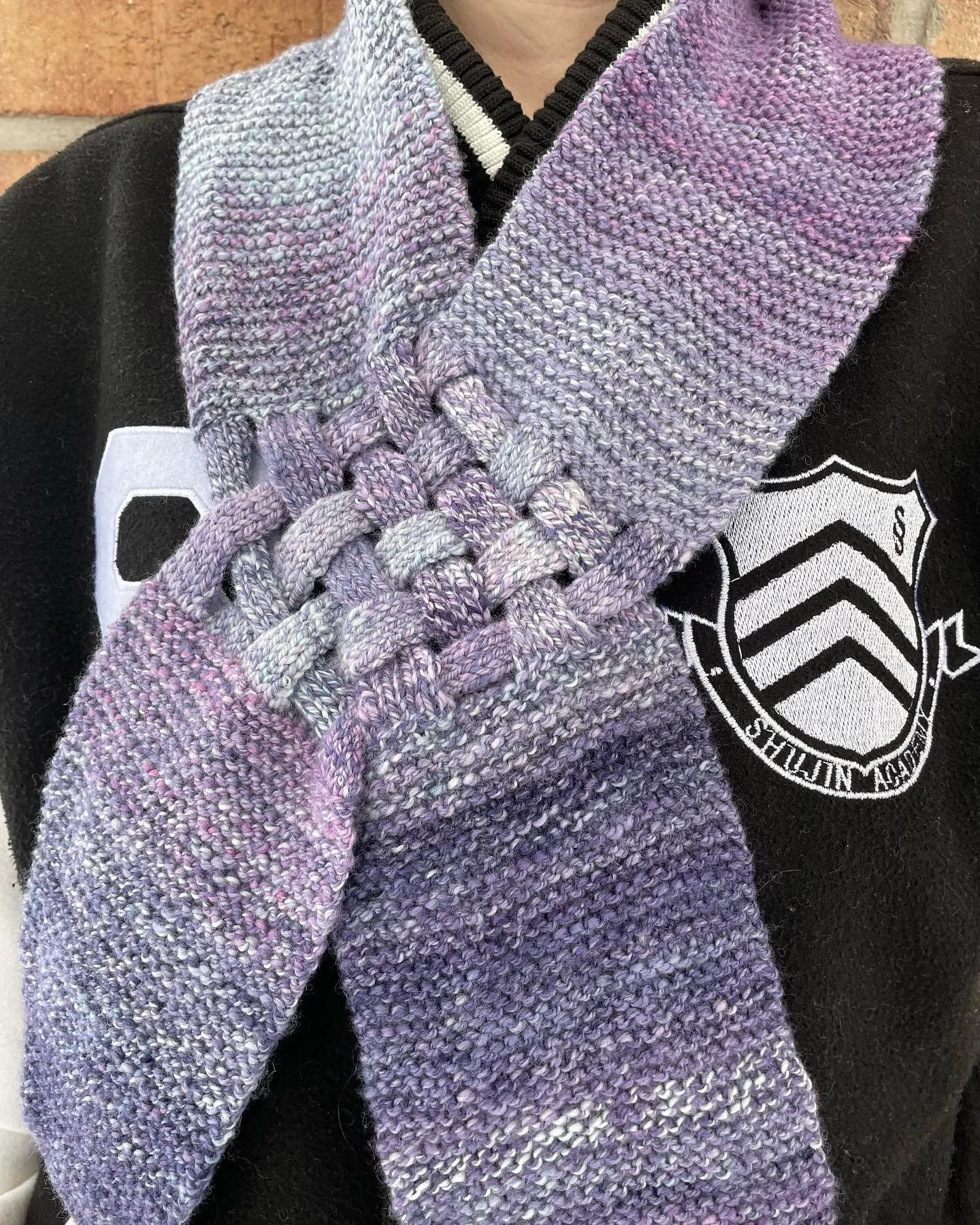

Some things I’ve made from my own hand spun
Appreciation of History
Spinning is intertwined (pun intended) with history in a big way. Textile technology has been the foundation of so many technological advancements, from the factory manufacturing system to computers and binary coding. If you’re a history buff, learning how to do things hands on in the way they were done for hundreds of years can be really eye opening. It can be a great advantage for anyone interested in historical reenactment to be able to make their own homespun as part of their costume to poudly show off at Ren faires or SCA events.
Community
While we typically think of spinners as sitting alone at a spinning wheel, spinning can be just as social as knitting or crochet. Modern spinning wheels are often more portable than their centuries-old counterparts; some are even made to fold up for travel. Sit ‘n Spins, spinning guilds, and online communities mean that spinning can be as social or as solitary as you like. You can get to know local shepherds and other fibre providers in your area; some even have open barn days where you can meet the sheep (or alpacas, or angora rabbits) and buy fleeces direct from the farmers. And don’t miss out on the many fibre events and festivals that take place around the world. Landmade and Woolstock in Canada, Stitches and Wool and Sheep in the US are just some of the many gatherings focused on bringing fibre people together. Not to mention all the agricultural fairs where attendees can meet breeders, buy fleece and products, and even compete for ribbons. However you like to find community in your craft, there is an option for you.
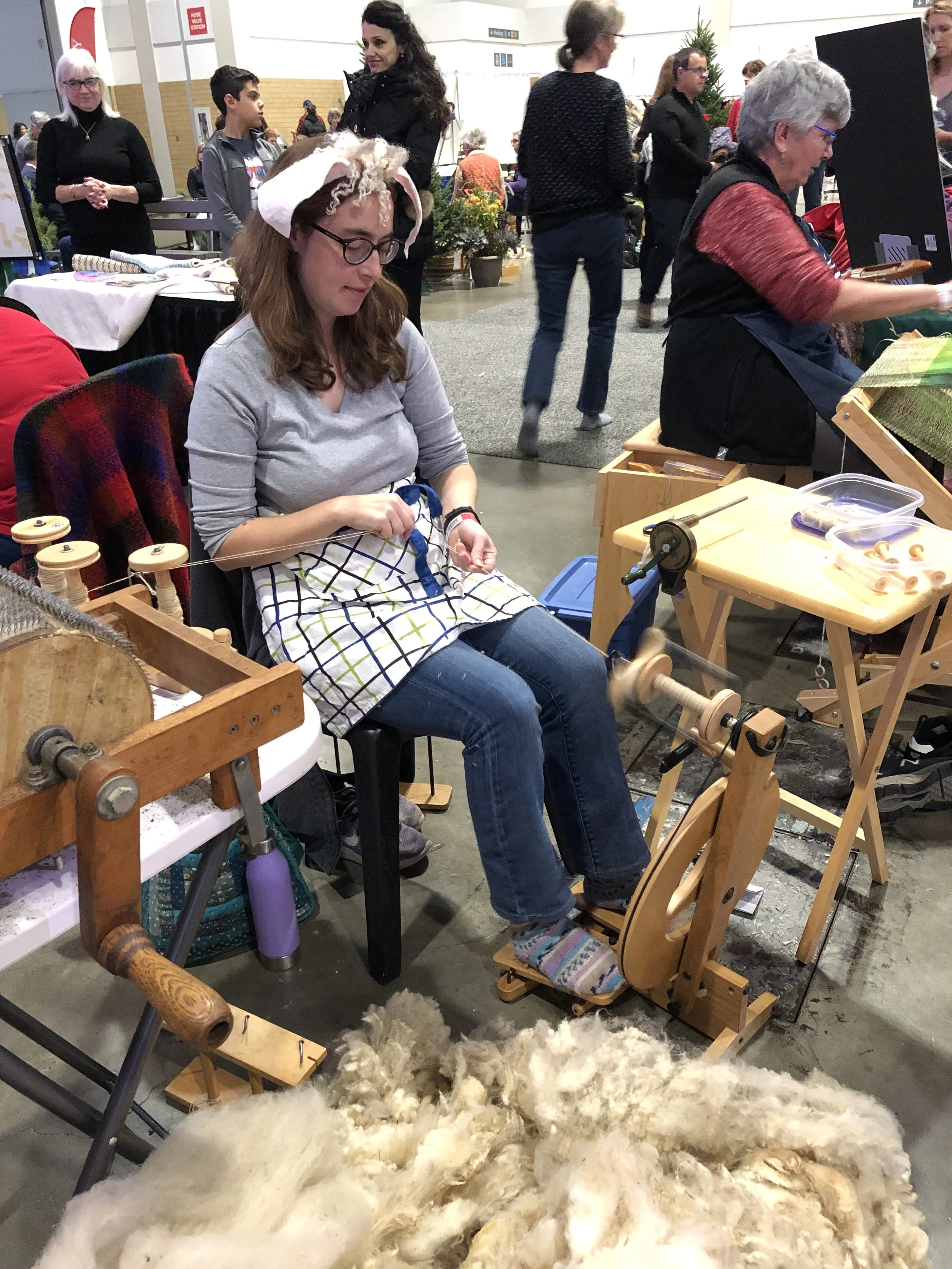
Competing with my Sheep to Shawl team at the Royal Agricultural Fair
Revolutionary
Although a necessary part of life for hundreds of years, spinning also has a history of rebellion and revolution. In the lead-up to the American Revolution, spinning bees were used to encourage local textile production in order to boycott yarn and fabric imported from England. Almost 200 years later, Mahatma Ghandi encouraged spinning for much the same reason: to reduce his country’s reliance on British imported goods (I’m seeing a trend), and as a unifying activity to bring together the many disparate communities of India under a common craft. When you consider the importance of textiles to everyday life, it makes sense that having local control over it would be a revolutionary act.
You can see this same revolution on an even more local level every time you make something instead of buying it. There is no Walmart for spinning supplies. Most spinners get their fibre from local sources, often knowing the names of the farmers and even the animals it came from. Many fibres, like sheep’s wool and alpaca, are by-products of the meat or dairy industry; they have to be sheared anyway, so using the fibre adds an end-use to what would otherwise be thrown away. Every piece of textiles you create is one less opportunity for a large capitalist company to make a profit over small, local businesses.
We, as a society, have become disconnected from how our every day items are made to a degree never before seen in human history. When we use something (and especially when we replace it) we don’t see or understand the work that went into making it, which makes that item worth less and more disposable. The more time and effort you put into making something, the more likely you are to mend it rather than throwing it in the landfill. In a world where you are bombarded with the pressure to buy things, making them yourself is a revolutionary act.
Do any of these reasons sound good to you? What are your own reasons for making things by hand? Let me know if the comments.
If you don’t yet know how to spin, and would like to, check out my courses page to find out where I’m teaching next.