
Why Learning to Knit is the Best New Year’s Resolution
Imagine this: you’re cuddled up under a blanket, mug of tea or hot chocolate on the table beside you. A cozy show or audiobook is on while the knitting stitches gliding under your fingers lulls your brain into meditative relaxation. That could be you this winter, all you have to do is learn to knit.
Learning a new skill or hobby is consistently in the top 10 things people add to their New Year’s resolutions list. Among all the “good for me” resolutions like “eat healthier” and “go to the gym,” learning a fun new skill feels less like an obligation and more like an aspiration. If knitting is the hobby you aspire to this year, let me tell you a few reasons why you’re really smart and that’s a really good idea.
Knitting is Good for Your Mental Health
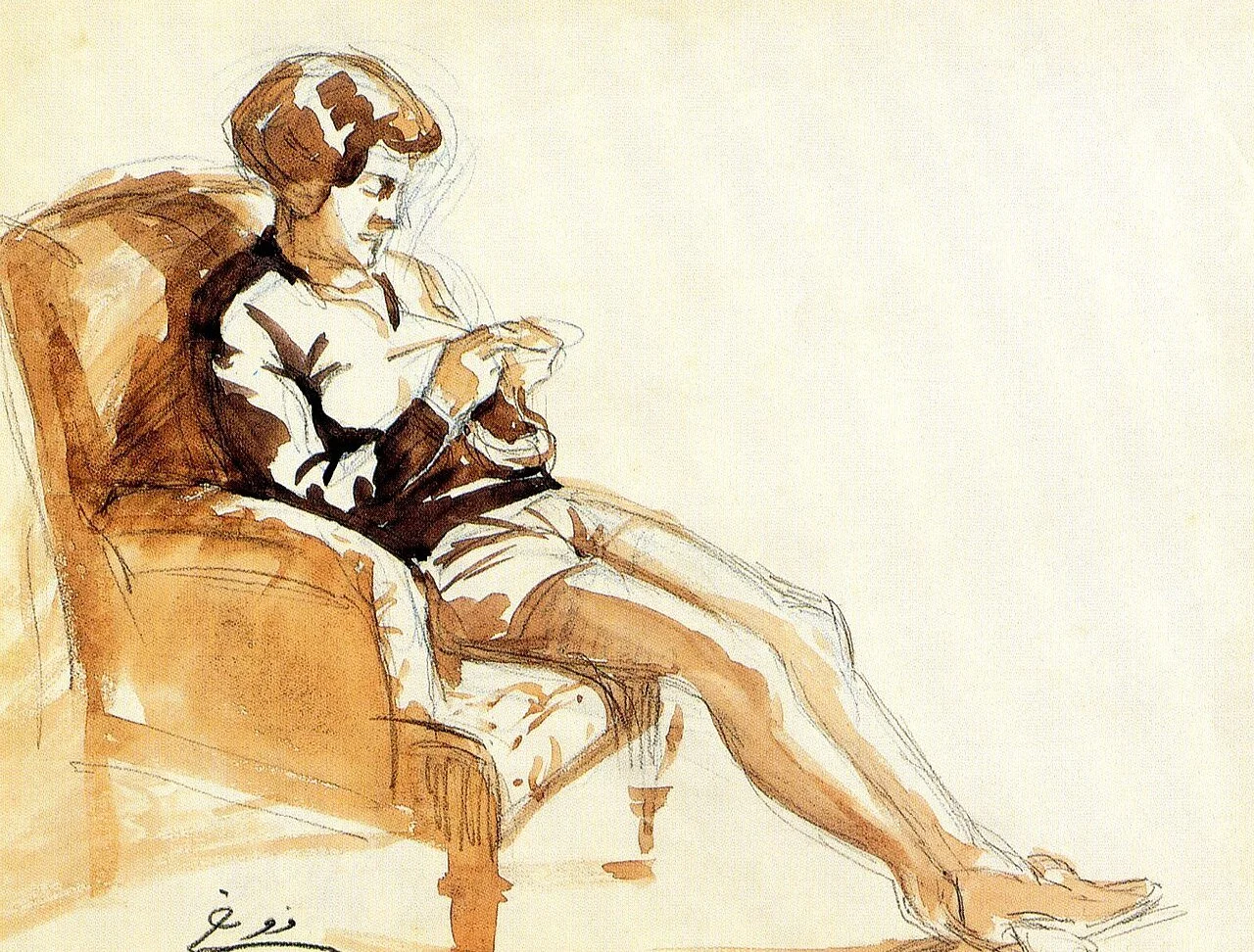
A Knitting Woman by Moustafa Farroukh
There’s a reason why the craft of knitting has not only survived but thrived despite the invention of the knitting machine in 1589. The fun of picking out yarns and patterns, the rhythmic feel of the stitches forming in your hands, and the satisfaction of wearing or using something that you made are all good for your well-being. This doesn’t just come from my own decades of personal experience with the craft; this is backed by science. According to the results of a 2012 survey of over 3,500 international knitters conducted by Stitchlinks and Cardiff University, knitters “commonly reported knitting for relaxation, stress relief and creativity” and they found “a significant relationship between knitting frequency and feeling calm and happy.” Frequent knitters also reported ”higher cognitive functioning.”
A 2000 study by Frances Reynolds for The Arts in Psychology looked at the narratives of 39 women who reported chronic to episodic depression and used needlework as a way to cope (knitting wasn’t specifically part of this study, but benefits from needlework tend to carry over). They found that “Depression could be challenged both via the creative process (that provided a sense of autonomy, decision-making, and creativity) and via the product (which could stimulate pride, evidence of skills and/or self-worth),” as well as the relaxation that comes from getting absorbed in a creative task: “The activity had the capacity to create islands of tranquillity amidst stressful life events.” And a 2009 study by University of BC suggested that knitting can reduce anxiety among women dealing with eating disorders. Knitting has been seen to be an accessible way to cope with stress and depression, as well as build self-confidence, relaxation, and happiness.
Knitting is Good for Your Cognitive Health
Looking at someone knitting, reclined in a chair, a blissed-out expression on their face (unless they just dropped a stitch, of course) you might not realize that you are watching someone building neural pathways in their brain. A 2019 study by The Mayo Clinic, Jacksonville, FL used an EEG to map the brain of a person while they knit. They found that the brain waves experienced during knitting were fronto-central theta rhythms. These are the brain waves experienced during meditation or when you’re just falling asleep or gently beginning to wake up. This accounts for the feeling of relaxation so often experienced by knitters and needle crafters when they get “into the flow.”
In a 2011 study by The Mayo Clinic in Rochester, MN and published in The Journal of Neuropsychiatry and Clinical Neurosciences of over 1,300 participants aged between 70 and 89, showed that participation in cognitive activities (which included crafts such as knitting and quilting) were associated with a 30% to 50% reduction in minor cognitive impairment. This was a greater reduction than other activities that we might also associate with cognitive preservation, like making art and playing music.
Knitting is Good for Your Social Life

Heavy Metal Knitting World Championship, 2019 in Joensuu, Finland [Associated Press] Telegram & Gazette
Knitting is enjoyed by introverts and extroverts alike. The Cardiff University survey mentioned above also concluded that “Knitting in a group impacted significantly on perceived happiness, improved social contact and communication with others.” In fact, most of the studies mentioned included findings about the positive social aspects of the craft. Knitting has always been a group activity, going all the way back to ancient Egypt when textile making (including spinning, weaving, and knitting) took place communally in a dedicated community building. Knitting groups have congregated for hundreds of years where knitters (mostly women) would socialize, forge and maintain social bonds and support systems, and even plan and participate in community outreach and activist activities (suffragettes often made sure to have their knitting with them during meetings).
Group knitting activities can involve more than just elderly women knitting in rocking chairs. Knitting groups meet in bars, parks, during heavy metal concerts, at baseball games, or as part of hiking groups (knitting with a gorgeous view of nature, anyone?). Knit stitches are more than just loops of fabric, they are also connections of community.
Knitting is Good for Your Physical Health
Knitting is, admittedly, a rather sedentary hobby, especially as it’s practiced today (we generally don’t need to knit while walking to market to sell our wares or watch over the flock anymore). But that doesn’t mean it doesn’t have a positive effect on our physical health. In 2009, a joint study with Stitchlinks and Royal United Hospital, Bath, England explored whether knitting could have a positive affect for people living with chronic pain. The study suggested that the “rhythmic repetitive movements [may have a] role in meditation and serotonin release,” as well as “the effect of bilateral patterns of hand movement on brain maps; automatic movements on rumination; the ‘end product’ and its effect on the reward system; the effect on cognitive function; [and] stimulation from colour, texture and being creative.”
Knitting is Good for Your Other Resolutions, As Well
Learning to knit can add a boost to your other resolutions, once you get over the initial learning curve. The relaxation found in every study mentioned would, naturally, lead to health benefits like reduced cortisol and lower blood pressure. The rhythmic nature of the movements can improve joint function and motor skills. Knitting can act as a distraction and reduce boredom snacking, helping you with portion control for weight loss. Small knitting projects are very portable; you can knit while you go for a walk, or while working out on the treadmill or stationary bike. It almost sounds fake how many aspects of your life knitting can have a positive effect on.
If you’re ready to take the plunge and you live in the Toronto area, check out my In-Person Courses page for my next scheduled knitting class. I’m also working on an online class, which will be available soon.